1001 Dinners 1001 Nights

Sunday, June 07, 2009

CHATTER 22 Influences on Dining Styles

The gradual change from a strictly formalised to a more diner-friendly style of service is a feature of gastronomic significance which occurred in the nineteenth century. The following essay was Sandra's response to this question, in the Adelaide University Master of Gastronomy course, describing the differences between service à la française and service à la russe, and the consequences of the introduction of service à la russe.

If we are what we eat we are also how we eat. The manner in which food is prepared, and meals arranged, is an expression of our psychological identity as well as our cultural background. This is remarkably illustrated by the change from service a la francaise to service a la russe.

Service a la francaise was adopted in France early in the 17th Century.[1] It is characterized by a preset table with a striking, sometimes edible, centrepiece and a large number of symmetrically placed dishes set out according to strict rules.[2] The food for the first course was set out before the guests entered the room.[3] The host served only the soup and carved the fish and meat. Many dishes were not touched and others completely consumed.[4] A second course constituting a multitude of roasts and side dishes followed.[5] Crumbs, or the tablecloths, were then removed to reveal a fresh cloth.[6] A cornucopia of elaborate desserts followed. There were often well in excess of 100 dishes.[7] Servants were at hand to remove and replace dishes and serve wine.[8]
Guests were seated according to rank and importance and food appropriate to their positions was placed before them.[9] This feudal arrangement emphasised the social inequality between diners. They discussed dishes, passed food and assisted each other to create a desirable meal for themselves.[10] This encouraged light casual conversation however it inhibited serious and meaningful discussions from which policies or conclusions could be reached.[11]

Service a la francaise had several shortcomings. It often resulted in cold and congealed food and sauces producing a meal of good ingredients but poor taste.[12] Kitchens had to be very large to prepare the multiplicity of dishes and accommodate numerous ovens, spits and utensils. Dining was a chaotic and confusing affair due to the constant activity at the table[13]. It was expensive and grossly wasteful. Service a la francaise had the advantage that diners could design their own dinner and enjoy doing so with neighbouring guests. The vast array of dishes offered allowed the diet conscious “to find something appropriate for his individual humoral temperament”.[14] Those with dietetic concerns could take food suited to their disposition and health needs. There were fewer servants around so gossip and conversation could flow freely. They were gay and rowdy affairs. The aims of the host were to “dazzle the eye rather than feed the stomach”[15] and to display wealth and hospitality. The emphasis was on the social affair, the gastronomic aspects of the meal were relatively unimportant. Dinners were abundant, dramatic luxurious and sumptuous and “could not fail to seduce”.[16] The remnants of service a la francaise are seen today in the smorgasbord or buffet. This provides a convenient way of entertaining larger numbers of guests in a practical manner in today’s small urban homes. It recreates something of the social atmosphere of service a la francaise.

Service a la russe became popular in Paris after the Russian Count Kourakin introduced it in about 1830.[17] It came into common use in England and Europe around 1870.[18] It is based on the principle of a limited number of courses and dishes each served to every guest. It was adaptable for both the wealthy and the petit bourgeoisie. It led to a different atmosphere whilst maintaining something of the former display. With room to set the table formally with elegant crystal, crockery and cutlery and elaborate floral centrepieces,[19] the emphasis now moved to the palate. The harmony and tastes of dishes became central to the meal. Each guest was offered the same meal,[20] which imbued the dinner with a sense of equality appropriate to the spirit of the French revolution. Food was presented immediately it was ready. Roasts could be carved in the kitchen, on a sideboard by a skilful servant or at the table by the host.[21]

Service a la russe was much quieter. There were servants constantly at hand inhibiting gossip, but here uninterupted serious discourse was possible. The number of dishes served might be as few as 10 reducing as the centuries progressed, greatly minimizing expense and waste.[22] Menus became essential so guests could organize their choices and pace their meal.[23] Smaller kitchens were adequate for culinary needs and to incorporate modern technology in ovens and advances such as water taps.

Incited by discourses by literati, such as Grimod and Brillat-Saverin, interest in gastronomy escalated early in the 19th century. The meal had changed from a spatial to a temporal event.[24] This linear service allowed diners to discuss and compare dishes. It also created the ability of restaurants to have menus and cost services which could not function otherwise.[25] Reduced availability of fresh local food, increasing urbanization, and a different attitude to life of the bourgeoisie were all factors in restaurants becoming more popular. The wealthy, industrious, social climbing upper middle classes had little time for leisure or lengthy meals and no need to celebrate seasonal abundance. Restaurants allowed them to be seen and display their status and wealth without the expense of lavish home entertainment.[26]

One of the consequences of service a la russe was a change in the relationship of the chef to the diner. It became the responsibility of the chef to plan the menu[27] and to produce meals that were elegant, tasty and flowed harmoniously. He needed to prepare interesting, novel, flavoursome and creative dishes that would attract clientele. The palate was becoming more significant than the entertainment. “Flavour takes precedence over style”. [28]This sowed the seeds of today’s celebrity chef as a “tastemaker, an arbiter elegantiae”.[29] Acceptance of his creations became a mark of a sophisticated palate.

Modern restaurants use elements of both service a la russe and service a la francaise. Restaurants such as the Melba[30] offer a la carte dining, hot and cold buffets and extensive desserts and have four chefs preparing buffet foods to patrons taste. Service a la russe is seen at its modern peak in the degustation menu which chefs use to display their talents. At El Bulli the aim is “to create dishes and techniques that engage guest’s sensory, emotional and intellectual faculties to the full, to surprise them and to encourage them to experience food in new and unexpected ways”.[31] Although patrons surrender their choices to the chef adjustments are made for allergies and particular dislikes. Whilst servants do not abound constant interruptions by waiters describing dishes and how they should be eaten, “chef recommends this be eaten from the left to right”[32] may interfere with conversation. The chef expects concentration on his food. He has become the guru of gastronomy.

These changes in dining styles that began over 200 years ago have had profound effects on meals and manners, which are never static. Modern dining represents a hybridization of both services, it is eclectic and creative. Each has advantages and disadvantages. Moreover the great flexibility provided by the recent revolution in cooking technology, for example cooking sous vide and the steam oven permit an endless expansion of cuisine.

Bibliography

Adria, Ferran. “A day at El Bulli: An insight into the ideas, methods and creativity of Feran Adria” Phaidon Press Ltd. London, New York. 2008.

Aron, Jean Paul. “The art of eating in France in France:Manners and menus in the 19th century” Translated by NinaRootes. {electronic resource} Owen. London 1975.

Bromfield, Andrea. “Food and Cooking in Victorian England: A History, Victorian Life and Times”. Prarger Publishers. Westport, Conn. 2007.

Edwardian Promenade. “Setting the table” http://edwardianpromenade.com/?p=1161 Accessed 10/05/2009.

Ferguson, Priscilla Parkhurst. “Accounting for Taste”. University of Chicago Press. Chicago. 2004.

Flandrin, Jean-Louis. “Arranging the Meal: A History of Table Service in France” University of California Press. Berkeley. 2007.

Flandrin, Jean-Louis. “Innovation from the revolution to world war 1” {Electronic resource} University of California Press. Berkley, California; London. c2007.

Goody, Jack. “Cooking, cuisine and class: a study in comparative sociology {electronic resource} Cambridge University Press. Cambridge (Cambridgeshire) New York.. 1982.

Hertzmann, Peter.”Service a la francaise” http://www.hertzmann.com/articles/2004/service Accessed06/05/2009.

Kaufman Cathy K. “Structuring the meal: the revolution of the service a la russe {electronic resource} in “Meal: Proceedings of the Oxford Symposium on Food and Cookery 2001” ed Harlan Walker. Blackawton, Devon: Prospect Books. 2002.

Kirwan, A.V. “Host and Guest: A Book about Dinners, Wines and Desserts” Bell and Daldy. London 1864.

Kubilius, Kerry. “Dining a la russe:Mealtimeservice in Russia inspired the French to change their style” http://russian-ukrainian-belarus-history.suite101.com/article.cfm/dining_a_la_russe Accessed 06/05/2009.

Kump, Peter. “How Cooks Became Chefs: A Brief History"
http://iceculinary.com/news/articles/article_17.shtml Accessed 10/05/2009.

Lucroft, Fiona. “The Fine Art of Eighteenth Century Table Layouts” in “Meal: Proceedings of the Oxford Symposium on Food and Cookery 2001” ed Harlan Walker. Blackawton, Devon: Prospect Books. 2002.

Mennell, Stephen. “All Manner of Food: Eating and Taste in England and France from the Middle Ages to the Present” Basil Blackwell Ltd. Oxford. 1985.

Ottomeyer, Hans. Service a la francaise and Service a la Russe: or the Evolution of Table between the Eighteenth and Nineteenth Centuries” in “Food and Material Culture, eds Martin R Sharer and Alexander Fenton. Tuckwell Press. East Lothian. 1998.

Revel Jean-Francois. “Culture and Cuisine: A Journey through the History of food” A Da Capo Paperback. Doubleday & Co Inc. New York. 1982.

Spang, Rebecca L. “The invention of the restaurant: Paris and modern gastronomic culture” Harvard University Press. Cambridge, Massachusets and London, England. 2000.

Thompson, Sir Henry. “Food and Feeding” Frederick Warne and Co. London. 1901
Tickletooth, Tabitha. “The Dinner Question” Routledge, Warne and Routledge. , 1860 Facsimile Edition Prospect Books. Blackawton. 1999

Unknown. “service a la francaise et service a la russe” Summary by miruku. May 29 2007. http://shvoong.com/humanities/1404993-serviceà -la-française- Accessed 06/05/2009

Wikepidea. Service a la russe. http://en.wikipedia.org/wiki/Service_Ã _la_russe Accessed 06/05/2009

Thursday, June 04, 2009

CHATTER 21 A Sephardic Feast


There are two main cultural branches of the Jewish people - Ashkenazim, whose origins lie mainly in Europe and Russia, and Sephardi which strictly refers to those Jews whose ancestors lived on the Iberian Peninsula. They have different styles of cooking. The Askenazi lived in a cold world, a world of chicken fat, onion and garlic, cabbage, carrots and potatoes and fresh water fish. The Sephardi lived in a warm world of peppers and aubergine, courgettes and tomatoes, rice and cracked wheat, saltwater fish and olive oil.
Greg Malouf, renowned for prize winning Middle Eastern travel cookbooks, iconic Melbourne restaurant MoMo's and for the introduction of Middle East meets West fusion food, cooked up a sumptous Sephardic feast fcor several hundred people at a fund raising dinner. Served on very large tables decorated with a Middle Eastern theme


the meal began with a Mezze Entree of silk hummus, tomato, leek and cumin relish, smoky baba ganoush


and jou jou bread which wa on the tables before the guests arrived.


Either stuffed into the bread or eaten separately each mezze was mouth watering. They lasted about three minutes. Next came an atlantic salmon, tarator style.


Cooked for 15 minutes at 80 degrees the fish was lightly but perfectly cooked. a layer of tehina was then covered with parsley, walnut, a touch of corianderand chilli to produce a superb second entree. The second course was a chickpea and lentil soup with chicken threads.


A common dish but again well spiced and a joy to the palate. My waiter Walid


was constantly at hand to serve wine and fold serviettes! This was followed by the main course designed for sharing except for the individual serves of lamb tagine cooked in parchment


with dates and preserved lemon, potato, onion and other vegetables.


It was accompanied by a colourful baby cos salad with purple and white whitlof and pomegranite dressing


and a jewelled couscous with pomegranite, currants and pistachio nuts.

None of these dishes are paricularly difficult to prepare but they were distinguished by great flavour and excellent balance. Dessert of thousand layer apple cake with apple and cinnamon torte followed by walnut baklava
was very sweet and rich followed by mint tea or Turkish coffee.
All in all an outstanding meal. Many of the dishes are available at MoMo's but be aware reservations are essential.

Monday, June 01, 2009

Pitchfork (Elsternwick) 09


We came across this restaurant at 476 Glenhuntly Rd (Ph. 9528 5788) by accident last week and had a very pleasant evening. Set in a long room with a pleasant gas fire in the middle


and lit by slightly pretentious chandeliers the bustling friendly waiters convey a warm and welcoming atmosphere. The menu is International with Italian, French, Russian and North African elements. I indulged myself with an entree of fried lamb brains with a spinach and cheese pastry ($12)


which was a cut above what my mother used to give us 100 years ago. Sandra loved her house made gnocchi tossed with roasted pumpkin, red capsicum, spinach and bocconcini in a creamy garlic sauce ($14).A few thin slices of Turkish bread, toasted presented with olive oil, balsamic AND butter and olives ($3) was very nice too. For mains I had the osso bucco,


slow cooked veal on a Milanese risotto. ($26) The veal was great but the risotto lacked texture and flavour. The 300G grain fed porterhouse beer battered euro frittes garden salad and red wine sauce. ($32 though only $30 on the menu)


was initially served plonked on top of the frittes. They took them back and served them in a separate dish to keep them crisp. There was no evidence of the advertised beer batter.
The steak was cooked more than requested despite the usual assurances that it would be as ordered. Sometimes we return sometimes we don't. It was a pretty chewy piece of meat but we kept it this time. a dessert of self saucing chocolate pudding with vanilla ice cream ($12 on the menu but they charged us $10!)

was good value. Wines are very cheap. We scoffed Henkell Piccolo NV 200 ml at $6.50. there is a reasonable range by the glass of almost exclusively Australian wines. If you want anything special a $5 corkage fee is ore than fair. They have a lot of interesting dishes and despite their evident weaknesses the overall experience was good enough for us to want to give them another try.

Score: 13.25/20

Thursday, May 28, 2009

Cutler & Co (Fitzroy) 09

This great barn of a place, probably built as a warehouse, has been transformed featuring white bare brick walls, modern low energy lighting,


padded comfortable chairs, a long padded bench seat along one wall and
plain unclothed tables a little to close to each other set with an eclectic set of knives.


These were not all mine.. The space is split into three areas. A large bar occupies most of the entrance area and there are two large open dining spaces.
Service is exceptionally obliging. We started with two entrees - hand dived Coffin Bay scallops, artichoke soup, migas, crusty bread and almond milk.


This was a great combination. The almond milk was rich and creamy and had a delicate fragrance. It mixed wonderfully with the delicate, lightly cooked scallops and the soup. ($18) The wood grilled quail, foie gras parfait, celeriac and golden raisins was perhaps the best quails I have ever eaten.


It also had some roasted almonds, spring onions and baby broccoli leaves- some one must have had fun in the kitchen! A brilliant dish, the quails tender, moist matched well with the small cigars of foie gras and the textural variation of the vegetables. Not so simple but simply superb. ($22). Wood grilled rock flat head with sauerkraut, just a dash of it, oyster and farm house smoked bacon ($39)


was more interesting than outstanding and expensive. Sauteed wild mushrooms, flaky pastry,white onion and fresh burrata ($28)


was a vegetarian entree size main. Dry aged 1 Kg Angus beef rib eye, wood grilled on the bone over Mallee root, served with shaved fennel, orange and dried chilli salad ($140) to share.


This came with a seed mustard, a Dijon mustard and a creamy mild horseradish sauce as well as a fabulous wine sauce - a reduction of Madeira, shallots, star anise, and ginger. An excellent rib eye made great by the accompaniments although the meat came to the table very cool and had to be reheated, and slightly more cooked as a result. Steamed Kiffler potatoes with chive butter ($8) were very good as was the cabbage and fennel salad. A chocolate ice cream sandwich ($16) was about average

as was the steamed pear and suet pudding with liquorice ice cream ($17),


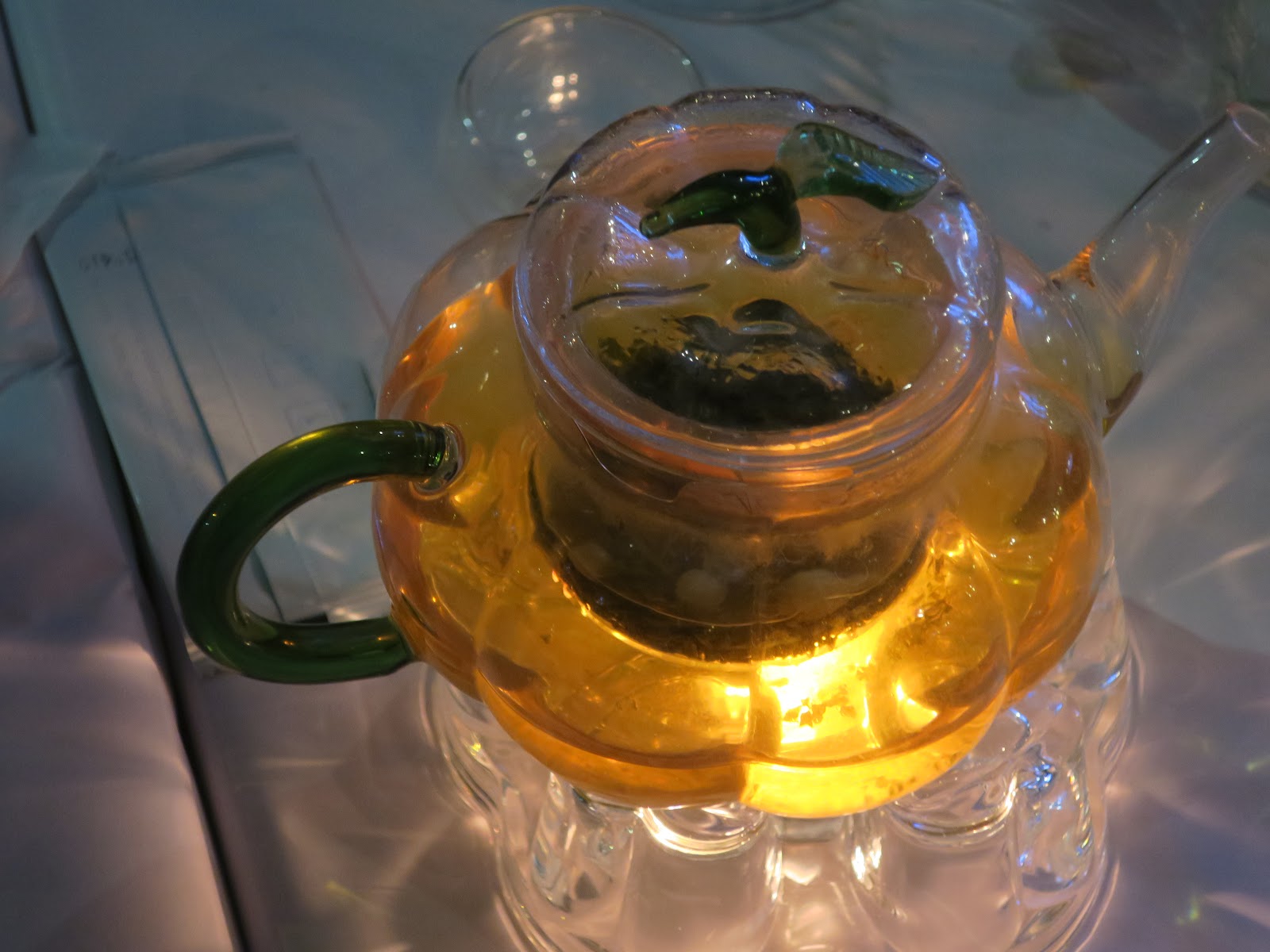
the flavour of the month. The house made bread is almost irresistible and a request for more butter was fulfilled with heaps more! Tea is serve din an imprssive service.
An Italian Sorelle prosecco was very poor($65) and not improved by the generous addition of a little cassis. Heathcote shiraz by the glass ($15) was even worse but gladly replaced by a French bordeaux.
All in all a superior meal putting this restaurant at 55 Gertrude St Fitzroy, in the two hat class.
Score 17/20


Saturday, May 23, 2009

Cafe de Stasio

Cafe de Stasio has remained largely unchanged at 31a Fitzroy St. St.Kilda for decades. Its high end Italian cuisine has been a favourite of former Age food guru John Lethlean whose unfailing flattering reviews, combined with promient advertisments in Epicure, have helped maintain its prominent place in the Melbourne food scene.
We have been to a couple of $30 'business' lunches which failed to impress except for the noise. The serves were small and the food unimpressive but perhaps dinner would be a better meal to judge by.
The place is as noisy as ever, the place to go if you don't want to talk. There is a competent air about the waiters in their short white coats, bow ties and professional demeanour. The tables are a good size for two with good linen, cutlery and glassware though the wine glass containing a candle


and wrapped in a cone of paper stuck into shape with a strip of paper titled de Stasio is more suited for a table at a cheap cafe which this certainly is not.
After the ", would you care for something to drink " as we reached the table which always annoys me, we were left alone for sometime before receiving menus.
My entrees of Parmesan herb crusted scallops on the shell was dry and overcooked the crumbs close to burnt.


The lobster omelet was also completely overcooked

- really a frittata . We returned them both. The replacement scallops were little better, still dry and missing the tender succulent sweetness characteristic of the best scallops. Rather than another try of the omelet we had an angel hair pasta in a fish sauce with some fish in it.
This was a very good entree and the waiter actually split the serve and presented it to us in two plates as we said we were sharing. Probably reduces the laundry bill that way.


For mains I indulged myself with roast suckling pork

which was served with a roasted apple some tough chard and a good rich sauce ($43) Sandra had an excellent roast duck


for her main.
The dessert was disappointing-
small, sweet and unremarkable. A bottle of Bellusi Prosecco about $34 retail was $75 or $15 by the glass was one of the least expensive offerings.


Over priced and over rated It will be a long time before I come back
Score: 13.5/20 but less for the food!

Tuesday, May 19, 2009

En Izakaya (Balaclava) 09

Surrounded by an eclectic collection of ethnic cafe/restaurants and bars at the site of the now defunct Pipers (at no. 227 )this is a pleasing addition to the Carlisle St dining scene. Dishes are all entree size and ideal for sharing a feature that appeals to me. There are about 16 dishes on the menu in three groups - from the garden, from the sea and from the paddock and a few specials on a


blackboard. Prices max out at about $16 with a miso soup at $4


and others at $8+. They also offer takeaway at slightly lower prices. We enjoyed a miso soup, perfect for a winter night, followed by deep fried prawns with yuzu marinated eggplant and pickled ginger. ($16)
very good too. An good size serve of eggplant tofu was dominated by thick miso sauce. A special of silver whiting wrapped with shiso and salted plum in a tempura batter, only $10,


would have been excellent had the batter been lighter. It came with a small handful of Murray River salt flakes too! Similarly the two, very good size soft shell crabs in batter on a garden salad. ($14).


Rice is $3/serve. There is a small, reasonably priced, wine list. We drank prosecco by the glass $8, and a redbank pinot $7
Comments: A positive addition. We will be back again.

Score: 13.5/20

Friday, May 15, 2009

Arkybar (South Melbourne) 09

This is a destination restaurant at 27 Coventry St. there is not another restaurant or shop in sight. Small tables in a long narrow room seat about 40 and they seem to have plenty of customers so it is advisable to reserve a table. The husband and wife team keep things moving at a good pace. Apart from the printed menu there are a large number of very varied special dishes, indeed there are more specials than set courses! We tried quite a few starting with entrees. My veal involtini rolled, braised and lightly spiced


was a nice start. For polenta lovers a mound of polenta with mushrooms and cheese


was a good but unexciting first course. An antipasti selection featuring prosciutto and cold cuts with lightly pickled plump green olives


was particularly appealing. Another special for that night the rack of veal cutlets served as three pairs on creamy mashed potato


was a very good meal. The lasagna had an undistinguished meat ragout with little taste


was bland and disappointing. It needed a better photographer to make it look good too. A chilli pasta dish was much better. A bread and butter style pudding with chocolate and apple and a creme anglaise sauce was another 'nice' but ordinary dessert. In all a pleasant place unpretentious and generally satisfying


Score: 13.75/20

Kimberley Gardens (St.Kilda East) 09

One of a few kosher restaurants in Melbourne, attached to the Quest Motel of the same name,at 441 Inkerman St. The restaurant is in a large irregular room with curved bay windows looking over the garden. Clothed well spaced tables make this a pleasant setting.
The menu has little to distinguish it from any other eatery.
Serves are large, the cooking 'domestic'. They open only for dinner Monday to Thursday and have a smorgasbord on Sunday
We tried a range of dishes starting with a selection of dips
with peta bread and some spring rolls. Neither were particularly good or bad. The pastry on the spring rolls was rather thick and heavy. A whole flounder
was on the small side but very tasty and cooked well to retain its moistness. A veal schnitzel was very large served
with a mass of chips and a salad. Steaks come in a variet of sizes, and prices, starting at and going to 750 gm for $64. We skipped them. Lamb chops were another handsome serve. As was the chicken schnitzel. Onion rings were specially tasty with a light batter, again a huge serve.


Desserts are not for the calorie consciousService is amiable and responsive but a little slow initially.
They have a limited wine list with Australian, New Zealand and Israeli representation at very reasonable prices. Despite the mass of food we couldn't get Ruby to eat anything!Prices are about average for this sort of meal. This is a good place if you don't feel like doing the dishes. Cuisine bourgoise - a good feed. Score:13.25/20

Thursday, April 30, 2009

CHATTER 20 Mead

This is an essay that Sandra wrote as part of her study for the Master of Gastronomy course

MEAD
Mead has a long and rich history. It is generally acknowledged as the first alcoholic drink known to man dating back about 8000 years.1 2 It is a beverage resulting from the fermentation of honey and water producing “honey wine”.3 Mead was ubiquitous in ancient civilisations worldwide, for example Vikings, Teutonic tribes, the Celts, Chinese, Mayans and Ethiopians. There are many references to mead in early writings, such as the Sanskrit text Rig-Veda, and the epic poem Beowolf. In 70 B.C.Pliny recorded a mead recipe.4 It has cultural associations with pagan gods, magic, rituals, festivals, medicine the church and the nobility. The rise and fall of its popularity and significance has been greatly influenced by agricultural developments, technological advances and sociological factors.
It is likely that mead was discovered accidentally, perhaps created by fermentation of honey diluted by rain and trapped in hollows in trees,5 centuries before man had any understanding of yeast and fermentation.6 Fermentation is the process by which yeast and some bacteria metabolise carbohydrates into carbon dioxide and ethyl alcohol.7
It was first described by Pasteur in 1857.8 The alcohol produced is toxic to the yeast. If there is sufficient sugar, the yeast will make enough alcohol; to kill itself. If there is an excess of sugar this results in a sweet drink. If there is insufficient sugar the yeast will stop dividing and no more alcohol will be produced. Unfortunately it may not taste good. Over 160 varieties of yeast and some bacteria are capable of fermenting sugar, many producing off tastes.
Our Neolithic ancestors must have tasted mead and been profoundly affected by it. As the resulting mind altering and mood elevating effects of alcohol could not be explained, it was reasonable to regard it as infused with the spirit of the Gods, with magical and sacred properties.9 10 The history of mead is shrouded in mythology. It was known as Nectar/ Ambrosia by the Greeks; ‘food of the gods’. Odin was said to have existed on mead alone.11 The Thriae, prophetesses at Delphi, known as ‘Melissae’, honey-priestesses, derived their inspiration from a honey intoxicant.12 Honey was thought to descend from the heavens in dew before being collected by bees, the messengers of the Gods.13 Mead played a significant part in ancient Norse rituals, especially the blot and sumble.14 The sumble is a drinking ritual where stories poetry and oaths were shared. The blot is a sacrificial rite. The original animal sacrifice was replaced by mead, and poured onto the ground or altar. In Celtic tradition mead was thought to enhance virility and fertility and have aphrodisiac qualities15. It was drunk from large communal drinking vessels called mazers. In Celtic wedding ceremonies newly weds were encouraged to drink mead for a month to increase the likelihood of a male heir, which may be the origin of the word ‘honeymoon’16
Before cultivation of grapes and grain wild bees were wide spread. Although some nomadic tribes carried knowledge of the natural fermentation of honey the geographical distribution of mead suggests that people independently discovered these skills. In Medieval times mead making was the province of a select and trained guild that controlled production and distribution17. At the time of the harvest hives were raided and the honey sent to the Lord to produce ‘high mead’ and as a sweetener. The wax, used for candles, medicinal salves and jewellery making, was dropped into vats of boiling water, melted, cooled and removed leaving a residue of sweet water. This was fermented by wild yeasts and made the ‘small mead’, which was drunk by priests and commoners.18
A variety of spices and herbs and fruits were added to mead to produce better tastes or to add curative properties. Metheglin may have ginger, tea, orange peel, nutmeg, coriander cinnamon, cloves or vanilla. Methglin derives from the Welsh meddyglyn meaning healing liquor and was originally employed in folk medicine .19 It was used in the treatment of melancholia, circulation, stomach and lung maladies20 The alcohol in mead provided a source of nutrition as well as the unsuspected benefit of sanitation, its manufacture destroying many pathogens in unsafe drinking water.21
Numerous factors reduced interest in mead. Sociological changes after defeat of the Norwegian King Harold and the Norman conquest in 1066 left the Norse in disarray and led to a greater French influence on British drinking habits22, and shifted interest towards viniculture and wines. With the industrial revolution and mechanical separation of wax from honey, there was insufficient honey left to make commercial quantities of mead.23 It requires warmer temperatures and longer fermentation than beers or wines.24 It is also more labour intensive and thus there is little scope for mechanization. It is unsuited to mass production. As agriculture developed and the availability of grapes and grains increased honey remained relatively scarce and expensive. With the use of hops beer became more stable and consistent with better taste. Thus beer and wine gradually replaced mead. Increasing urbanization and readily available cheap sugar also contributed. Since the 19th century mead making has survived as “an artisan craft void of large scale commercialisation”,25 however it has continued to be drunk, and even remains the national drink in Ethiopia known as T’ej26
Recently there has been a resurgence of interest in mead. Standard bearers are monastic societies and organizations like The Society for Creative Anachronisms
(SCA) that endeavours to accurately recreate pre Renaissance culture.27 The internet provides further stimulus with a wealth of information about every aspect of mead. There is an International Mead Festival and an International Mead Association.28 This resurgence is partly due to an interest in our past, to novelty, to meads association with nature, its cheapness and due to the fact that the ingredients are universally available and the process for making mead is essentially simple.
Throughout its history, as described in this essay, mead is seen as an exemplar of the role of alcohol in society. It caused inexplicable mood changes distortions inperceptions of reality and “… might have been thought to bring man closer to the gods”.29
Communal drinking is a social act facilitating bonding and was integral to many rituals.30 Mead provided calories and a bacterially safe liquid. Mixed with herbs it had medicinal attributes, it elevated the spirit, relieved pain and liberated man from daily tensions.
Mead has failed to maintain a major place in our culture today because of competition from beer and wine. The culture of grape wine and beer drinking has been surrounded by a mystique that cannot be matched by mead. Technological advances, mechanization and social factors have all played a part. Schramm believes that the reputation of mead as a powerful aphrodisiac, regardless of its verity, and the enthusiasm of the SCA, will ensure that mead will always have some place among our wines.31

References

1 Richard Cornish, The Age, Epicure, July 24, 2007.
2 ScienceDaily, Dec 07, 2004. www.sciencedaily.com Accessed 30/03/2009.
3 Don and Patricia Brothwell, Food in Antiquity: A Survey of the Diet of Early Peoples, “Ancient Peoples and Places” Thames and Hudson, London 1998. p145
4 Wikipedia. http://en.wikipedia.org/wikj/Mead Accessed 28/03/2009.
5 Richard B, Webb, The History and Magic of Mead, http://home1.gte.net/richwebb/mead.htm Accessed 30/03/2009.
6 Sky River. “A Brief History of Mead” www.skyriverbrewing.com/history.asp Accessed 30/03/2009.
7 New Encyclopaedia Britannica, Vol 4 Encyclopaedia Britannica Inc, 15th Ed Chicago, 2005. p740
8 New Encyclopaedia Britannica, Vol 7 Encyclopaedia Britannica Inc, 15th Ed Chicago, 2005. p987
9 Webb. p1
10 Sky River. p1
11 Vicky Rowe. Gift of Gods, Drink of Kings, “Realbeer.com”. Accessed 03/03/2009.
12 Harrison, Jane “Mead: Nectar of the Gods” www.aztriad.com/mead.html . Accessed 03/04/2009.
13 Sky River p1
14 Lewis Stead. Mead: The Brew of the Gods “Internet Book of Shadows” www.sacred-texts.com/bos/bos589.htm Accessed 28/03/2009.
15 Stacey Slinkard, Honey Wines are on the Rise” http://wine.about.com/od/winearoundtheworld/a/meads.htm Accessed 26/03/2009.
16.Webb. p1
17 Lady Bridget. and Lord,Riekin. “A Brief History of Mead” www.ladybridget.com/m/hxmead.html. Accessed 18/03/2009.
18 Wikipedia
Joan P. Alcock. Food in the Ancient World “Food Through History” Westport, Connecticut, London. Greenwood Press. 2005. p 91
20 Maxwell of McLaren Vale “Meads History and Recipes” www.maxwellwines.com.au/meads/meads-history-recipes/html p1 Accessed 26/03/2009.
21 Webb p1
22 Ken Schramm “The Compleat Mead Maker” Brewers Publications, 2003. p13
23 Schramm p14
24 Schramm p14
25 Lady Bridget p3
26 John Dilley, Dick Dunn, et al. “Mead”. The Mead Lovers Readme file, revision 14. http://brewery.org/library/meadfaq.html. Accessed 24/03/2009.
27 Schramm p15
28 Phillips p1
29 Conference 5. Principles of Gastronomy. Adelaide Uni. Assignment notes. 2009.
30 Schramm p16
31 Schramm p15

Tuesday, April 14, 2009

Maris (Malvern) 09


Right at the start of Glenferrie Rd. at the Dandenong Rd end (no.15) is a surprising little restaurant. I was disappointed 18 months ago but it continues to get good reviews so we tried it again and I'm glad we did. The decor is unchanged. A wooden rocking horse in the front window, white artificial marble topped bare tables with chicken themed straw bread baskets - quite a homely feeling about it.
Before anything house made very crunchy bread was served with an olive and anchovy paste and an lovely amuse bouche of tomato jelly with a light foam was presented. We started with two soups - the crab consomme, with abalone, celeriac and tarragon, ($17) was tasty and well seasoned, the Jerusalem artichoke soup, an unusual offering, served with lots of goodies including a soft poached egg and black pudding, ($17) really excellent full of taste.

For mains the gnocchi were unusually soft and very bland. They were mixed with duck meat and outstanding duck liver and celery salad ($24)
I would have preferred a firmer texture.
The smoked free range suckling pork belly was super. Served with a rather minimal smokey potato cream and pickled vegetables ($33)


Very tender with a light smokey taste and aroma rising from the plate it was delicious. On another occasion we tried a couple of other dishes. An entree of grilled quail with fine barely, soft duck egg and shimeji mushrooms ($17)
was hard to identify from its presentation. The quail had been completely boned making it an easy dish to enjoy but the taste was extremely mild and modified by its accompaniments. A poached quince amuse
before the main was very pleasant. We then enjoyed a slender fillet of King George whiting with braised rice, chorizo and cuttlefish with a light mussel sauce,
a very delicate dish ($33), and a good example of slow cooked beef with swiss chard, fregola, radichio and blood orange. ($32)
This was so tender one would hardly need teeth to enjoy it and tasted great too. A serve of fried organic potatoes ($8)

was also much appreciated. Another palate cleanser appeared before the cheese. We shared a plate ($25) of French and Italian cheeses. Good size and good variety, one goats milk, one sheep and two cows milk but I could have done without the peccorino which I prefer grated on pasta.
Unfortunately the dessert, panacotta, with macerated figs and apricots with almond biscuit ice cream
softened and more or less melted before we got to eating it.
Prosecco still at $9 a glass was a pleasant accompaniment.
I think the dearest item on the menu is $33 and we ended up paying about $145 before the gratuity. It defies my imagination to come up with the answer to the question How do restaurants set their prices. Why is this dish $17 and that one $18 or $32 or $33 or whatever. I would be pleased to be enlightened.
Score: 15/20

Tuesday, April 07, 2009

Carre Deli (Elsternwick) 09


This little gourmet deli around the corner from Glenhuntly Rd serves a small range of sandwiches and light meals. A constant stream of Deli customers keep the staff very busy and their four tables are constantly occupied. The walls are lined with gourmet pastas, fancy spices and virgin olive oils,


It's not Simon Johnson but they do have some very nice looking cheese. A blackboard serves as the menu


and the prices are very reasonable. We enjoyed a pastrami sandwich between two toasted slices of rye
and a rare beef roll $8.50 each.

The chicken soup looked fantastic - next time. There will be a next time!
Worth a visit for the Glenhuntly Rd brigade.

CHATTER 19 - The Distinguishing Dish

For ethnic cuisine are there particular dishes which mark the excellent chef from the very good, the good and the just plain ordinary?
To some degree I think there are such dishes. I think for Chinese sweet and sour prawns in batter is a good example. To retain any crispness the sauce has to be added only a moment before the dish is served The proportions and size of the accompanying pieces onion, pineapple and peppers and the proportion of them to the prawns is important as is the amount they have been cooked. Getting the sauce right is crucial it has to be not to thin nor to gluggy or gluey, not to sweet nor to sour and, obviously, served at an appropriate temperature.
For a French restaurant perhaps French onion soup is a pretty good test. Every element can be out of proportion or the onion can be over caramelised.
There area lot of things that have to be just right. I have had so many bad creme brulees and other custard, so many bad attempts at mousses, failed self saucing cakes I think there is probably a dessert which is a true test of a chef. Can a single dish distinguish a Greek chef, a Lebanese a Japanese or any of the other myriad of cooking styles?